Artificial intelligence is rapidly becoming the foundation of the next wave of global innovation. It is no longer just a tool for automation or data analysis; it is now a driving force behind new discoveries, business models, scientific breakthroughs, and creative industries. Across nearly every sector, AI is accelerating the pace of innovation in ways that were previously unimaginable.
The next generation of innovation will not be defined solely by human effort or traditional technology. Instead, it will be shaped by the collaboration between human intelligence and machine intelligence. This partnership is opening doors to new possibilities that are transforming how societies grow, compete, and evolve.
Understanding how AI is fueling this new era of innovation is essential for anyone seeking to navigate the future of technology, business, and global development.
The Role of AI in Modern Innovation
Artificial intelligence is fundamentally changing how innovation happens. Traditionally, innovation relied on human creativity, experimentation, and trial-and-error processes. While these elements remain important, AI now enhances and accelerates every stage of innovation.
AI contributes to innovation by:
- Analyzing massive datasets to identify patterns
- Generating new ideas and solutions
- Automating repetitive research tasks
- Simulating outcomes before real-world implementation
- Reducing time required for experimentation
By processing information at incredible speed, AI allows innovators to test ideas faster and more efficiently than ever before.
This shift is making innovation more data-driven, predictive, and scalable.
AI as a Catalyst for Scientific Breakthroughs
One of the most powerful impacts of AI is in scientific research. Scientists are now using artificial intelligence to solve complex problems that would take humans years or even decades to complete.
AI is accelerating breakthroughs in fields such as:
1. Medicine and Healthcare
AI helps researchers discover new drugs, analyze diseases, and develop personalized treatments.
2. Climate Science
AI models predict climate patterns, track environmental changes, and support sustainability efforts.
3. Physics and Engineering
AI assists in modeling complex systems, from quantum physics to aerospace engineering.
4. Biology and Genetics
AI analyzes genetic data to understand diseases and develop gene-based therapies.
By processing enormous amounts of scientific data, AI is helping researchers move from slow discovery processes to rapid innovation cycles.
AI and Business Innovation
In the business world, artificial intelligence is driving a new era of innovation in products, services, and business models.
Companies use AI to:
- Understand customer behavior
- Develop new products faster
- Optimize operations and supply chains
- Predict market trends
- Improve decision-making
AI also enables entirely new types of businesses that were not possible before, such as:
- AI-powered platforms
- Personalized digital services
- Autonomous systems and robotics companies
- Data-driven subscription models
Startups and large corporations alike are using AI to gain a competitive advantage by innovating faster and more intelligently.
The Rise of AI-Driven Creativity
Innovation is not limited to science and business—AI is also transforming creativity.
Artificial intelligence is now being used in:
- Music composition
- Film production
- Graphic design
- Writing and content creation
- Video game development
AI tools can generate ideas, suggest designs, and even create full pieces of creative content.
This has led to a new form of innovation known as augmented creativity, where humans and machines collaborate to produce original work.
Rather than replacing human creativity, AI enhances it by providing new tools and possibilities.
AI in Product Development and Design
Product development is becoming faster and more efficient thanks to AI-powered tools.
AI helps designers and engineers:
- Simulate product performance before manufacturing
- Test multiple design variations quickly
- Identify potential flaws early in development
- Optimize materials and production costs
- Predict user preferences and behavior
This reduces development time and increases the likelihood of successful products.
Industries such as automotive, electronics, and consumer goods are already heavily using AI to design the next generation of products.
AI and Startup Innovation
Artificial intelligence is also transforming the startup ecosystem. Entrepreneurs now have access to tools that allow them to build, test, and scale ideas faster than ever before.
AI empowers startups by:
- Automating business processes
- Providing market insights
- Reducing operational costs
- Enhancing customer engagement
- Supporting rapid prototyping
Even small teams can now compete with larger companies by leveraging AI-powered platforms.
This democratization of innovation is one of the most important impacts of artificial intelligence on the global economy.
AI and Digital Transformation
Digital transformation refers to the integration of digital technologies into all areas of business and society. AI is the core driver of this transformation.
Organizations are using AI to:
- Digitize operations
- Improve customer experiences
- Automate workflows
- Enhance cybersecurity
- Enable data-driven decision-making
As a result, traditional industries such as banking, retail, manufacturing, and education are being completely reshaped.
AI is not just improving existing systems—it is redefining how organizations operate from the ground up.
The Speed of Innovation in the AI Era
One of the most significant changes brought by AI is the speed of innovation.
Previously, developing new technologies could take years of research and testing. Now, AI allows:
- Faster data analysis
- Rapid prototyping
- Instant simulations
- Automated testing
- Continuous optimization
This acceleration means that industries evolve much faster than before, creating both opportunities and challenges.
Companies that fail to adapt to AI-driven innovation risk being left behind.
AI and the Future of Education and Skills
The next generation of innovation depends heavily on education and skill development.
AI is transforming education by:
- Personalizing learning experiences
- Offering intelligent tutoring systems
- Providing real-time feedback
- Simulating real-world scenarios
- Supporting lifelong learning
As AI continues to evolve, new skills will become essential, including:
- Data literacy
- AI system understanding
- Critical thinking
- Creativity and innovation
- Ethical awareness
Future innovators will need to understand how to work alongside AI rather than compete against it.
Ethical Innovation in the AI Era
With the rise of AI-driven innovation, ethical considerations are becoming increasingly important.
Key ethical challenges include:
- Ensuring fairness in AI systems
- Preventing bias in decision-making
- Protecting user data and privacy
- Maintaining transparency in algorithms
- Avoiding misuse of AI technologies
Innovation without ethics can lead to unintended consequences, including inequality and loss of trust.
Responsible innovation ensures that AI benefits society as a whole.
Human-AI Collaboration as the Future of Innovation
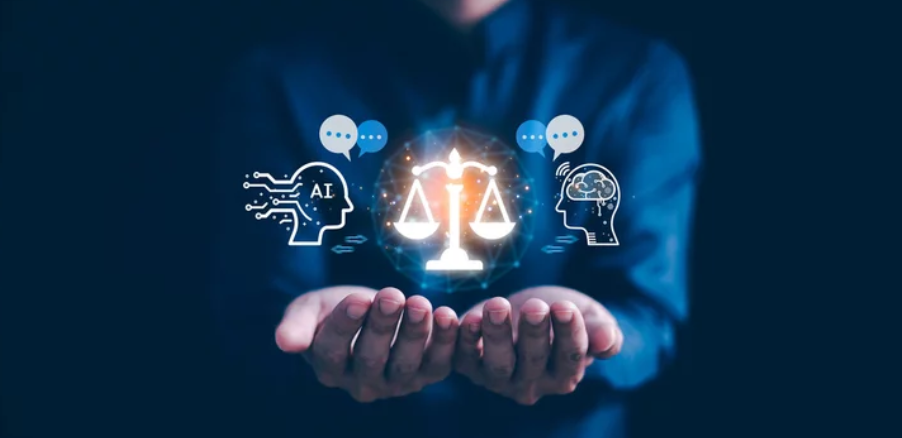
The most important trend in the next generation of innovation is collaboration between humans and AI.
In this model:
- AI handles data processing and analysis
- Humans provide creativity, strategy, and ethical judgment
- Innovation becomes faster and more efficient
This partnership allows humans to focus on imagination and problem-solving while AI handles complexity and computation.
The result is a more powerful and balanced innovation ecosystem.
The Global Impact of AI Innovation
AI-driven innovation is not limited to developed countries. It has the potential to transform economies worldwide.
In developing regions, AI can help:
- Improve agriculture and food production
- Expand access to education
- Strengthen healthcare systems
- Support small businesses
- Enhance infrastructure planning
However, unequal access to AI technology could also widen global inequality if not addressed properly.
Ensuring inclusive access to AI innovation is essential for balanced global development.
The Future of Innovation with AI
Looking ahead, the next generation of innovation will likely include:
- Fully autonomous research systems
- AI-designed products and infrastructure
- Real-time global problem-solving networks
- Human-AI creative ecosystems
- Intelligent cities powered by adaptive systems
Innovation will become continuous rather than periodic, with AI constantly generating improvements and new ideas.
This will create a world where progress happens faster and more dynamically than ever before.
Conclusion
Artificial intelligence is reshaping the foundation of innovation across every sector of society. It is accelerating scientific discovery, transforming business models, enhancing creativity, and redefining how products and services are developed.
The next generation of innovation will not be driven by humans or machines alone, but by their collaboration. AI will provide speed, scale, and analytical power, while humans will contribute creativity, vision, and ethical judgment.
However, this transformation also requires responsibility. Ethical considerations, education, and equal access to technology will be essential for ensuring that AI-driven innovation benefits everyone.
Ultimately, artificial intelligence is not just changing innovation—it is redefining what innovation itself means in the modern world.
Also Read :