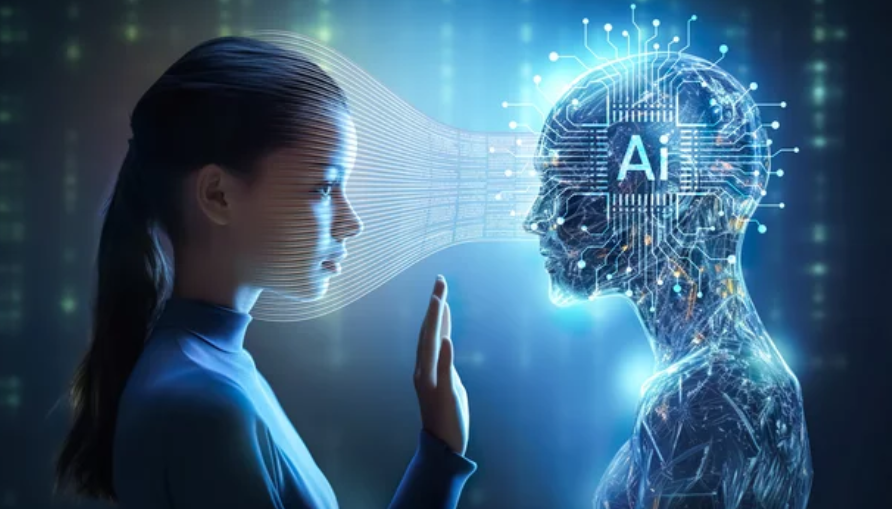
Artificial intelligence is rapidly transforming how people and organizations think about productivity. In the past, productivity was measured mainly by human effort, working hours, and manual output. Today, AI is shifting this definition toward something far more dynamic—where machines and humans work together to achieve faster, smarter, and more efficient results.
From automating repetitive tasks to enhancing decision-making and accelerating innovation, AI is becoming a powerful force behind the next generation of productivity. It is not just helping people work faster; it is fundamentally changing what “work” means in the first place.
As AI continues to evolve, it will redefine productivity across industries, economies, and even personal life. The result is a future where efficiency is no longer limited by human capacity alone but amplified by intelligent systems.
The Traditional Meaning of Productivity
Traditionally, productivity has been measured in simple terms:
- Hours worked
- Tasks completed
- Output produced
- Efficiency per worker
This model worked well in industrial economies where physical labor and repetitive tasks dominated.
However, in today’s digital economy, productivity is no longer just about doing more work in less time. It is about:
- Making better decisions
- Reducing errors
- Automating repetitive processes
- Improving creativity and innovation
- Using data effectively
Artificial intelligence is reshaping all of these dimensions, making productivity more intelligent rather than purely mechanical.
How AI Is Transforming Workplace Productivity
Artificial intelligence is already changing how workplaces operate across industries such as finance, healthcare, manufacturing, education, and technology.
AI improves productivity by:
1. Automating Repetitive Tasks
AI can handle routine tasks such as data entry, scheduling, customer support, and report generation. This allows employees to focus on more complex and creative work.
2. Enhancing Decision-Making
AI analyzes large datasets and provides insights that help managers and teams make faster and more accurate decisions.
3. Reducing Operational Errors
Machine learning systems can detect mistakes and inconsistencies in real time, reducing costly human errors.
4. Improving Communication and Collaboration
AI tools assist with translation, summarization, and workflow coordination, making teamwork more efficient.
5. Accelerating Research and Development
AI speeds up innovation by analyzing data, simulating outcomes, and generating ideas at scale.
Together, these improvements significantly increase overall workplace efficiency.
AI and Automation: Redefining Human Roles
One of the most important impacts of AI on productivity is automation. Intelligent systems can now perform tasks that previously required human labor.
This includes:
- Manufacturing processes
- Customer service interactions
- Financial analysis
- Logistics and supply chain management
- Data processing
However, automation does not simply eliminate jobs—it changes them.
As AI takes over repetitive tasks, human roles are shifting toward:
- Strategic thinking
- Creative problem-solving
- Emotional intelligence tasks
- Complex decision-making
- Innovation and design
This shift means productivity is no longer measured by how much manual work a person does, but by how effectively they collaborate with AI systems.
AI as a Productivity Partner
Rather than replacing humans, AI is increasingly acting as a productivity partner.
AI-powered tools can:
- Write documents and reports
- Generate ideas and content
- Analyze data instantly
- Create presentations
- Assist with coding and technical tasks
- Manage schedules and workflows
This allows individuals to accomplish in hours what once took days or weeks.
In this sense, AI acts like a “co-worker” that enhances human performance rather than competing with it.
The most productive professionals of the future will likely be those who know how to work effectively with AI systems.
AI in Knowledge Work and Digital Productivity
Knowledge-based industries are experiencing some of the biggest productivity gains from artificial intelligence.
Fields such as marketing, law, education, journalism, and software development are being transformed by AI tools.
Examples include:
- AI writing assistants generating content drafts
- Legal AI analyzing contracts and documents
- Educational platforms personalizing learning materials
- Marketing tools optimizing campaigns in real time
- Developers using AI to write and debug code
These tools reduce the time required for research, analysis, and content creation, allowing professionals to focus on higher-level thinking.
The Rise of Hyper-Personalized Productivity
One of the most powerful future trends is personalized productivity systems powered by AI.
Instead of using one-size-fits-all tools, individuals will have AI systems that adapt to their:
- Work habits
- Cognitive patterns
- Energy levels
- Learning styles
- Daily routines
For example, AI assistants may:
- Suggest the best time for focused work
- Prioritize tasks based on urgency and importance
- Reduce distractions automatically
- Optimize schedules for maximum efficiency
This level of personalization could dramatically increase individual productivity without increasing workload.
AI and Time Management Efficiency
Time is one of the most important resources in productivity, and AI is transforming how it is managed.
AI-powered systems can:
- Automatically schedule meetings
- Eliminate scheduling conflicts
- Predict task duration
- Optimize workflows
- Reduce unnecessary interruptions
By managing time more intelligently, AI helps individuals and organizations focus on high-value activities.
In the future, time management may become largely automated, allowing people to spend more time on creative and strategic work.
AI in Industrial and Manufacturing Productivity
In industrial sectors, AI is driving massive productivity improvements through smart manufacturing systems.
AI-powered factories can:
- Monitor machines in real time
- Predict equipment failures
- Optimize production lines
- Reduce waste and energy usage
- Improve quality control
This concept is often referred to as “Industry 4.0,” where machines, sensors, and AI systems work together seamlessly.
The result is higher efficiency, lower costs, and faster production cycles.
AI and Creative Productivity
Contrary to early fears, AI is not just improving technical productivity—it is also transforming creative work.
Artists, writers, designers, and musicians are using AI to:
- Generate ideas
- Create drafts and prototypes
- Explore new styles
- Speed up production processes
AI does not replace creativity; instead, it expands it by removing technical limitations.
For example:
- Writers can use AI to overcome writer’s block
- Designers can generate multiple visual concepts instantly
- Musicians can experiment with new sounds and compositions
This leads to a new era of “augmented creativity,” where human imagination is supported by machine intelligence.
The Productivity Paradox: More Output, Less Effort
One of the most interesting effects of AI is the productivity paradox: people and organizations can achieve more output with less effort.
This happens because AI:
- Reduces manual workload
- Speeds up decision-making
- Automates routine processes
- Eliminates inefficiencies
However, this also raises an important question: what should humans do with the extra time created by AI?
Possible outcomes include:
- Increased focus on innovation
- More emphasis on education and learning
- Better work-life balance
- Expansion of creative industries
The way society responds to this shift will shape the future meaning of productivity itself.
Challenges of AI-Driven Productivity
Despite its benefits, AI-driven productivity also introduces challenges.
1. Job Displacement
Automation may reduce demand for certain types of jobs, especially repetitive roles.
2. Skill Gaps
Workers may need new digital and analytical skills to remain competitive.
3. Over-Reliance on AI
Excessive dependence on AI systems could reduce human critical thinking.
4. Inequality
Organizations with access to advanced AI tools may outperform those without them, widening economic gaps.
5. Data Privacy Concerns
AI productivity systems often rely on large amounts of personal and organizational data.
Addressing these challenges will be essential for ensuring fair and sustainable productivity growth.
The Future of Productivity: Human + AI Collaboration
The long-term future of productivity is not about replacing humans with machines but about collaboration between both.
In this future model:
- AI handles repetitive and data-heavy tasks
- Humans focus on creativity, strategy, and judgment
- Work becomes more efficient and meaningful
This hybrid system is known as augmented productivity.
It allows individuals and organizations to achieve higher performance while maintaining human control and creativity.
Long-Term Vision of AI Productivity
Looking ahead, AI may redefine productivity in even more profound ways.
Future possibilities include:
- Fully autonomous workplaces
- AI-managed business operations
- Real-time global productivity optimization
- Intelligent assistants embedded in everyday environments
- Continuous learning and adaptive work systems
In such a world, productivity will no longer be limited by time, effort, or human capacity alone.
Conclusion
Artificial intelligence is fundamentally redefining productivity by transforming how work is done, how decisions are made, and how time is managed.
It is enabling automation, enhancing creativity, improving decision-making, and creating new forms of efficiency across industries. However, it also introduces challenges such as job displacement, inequality, and ethical concerns.
The future of productivity will not be defined by humans or machines alone, but by their collaboration. AI will handle complexity and repetition, while humans will provide creativity, judgment, and purpose.
Ultimately, AI is not just increasing productivity—it is changing its meaning, moving the world toward a future where intelligent systems and human potential work together to achieve more than ever before.
Also Read :