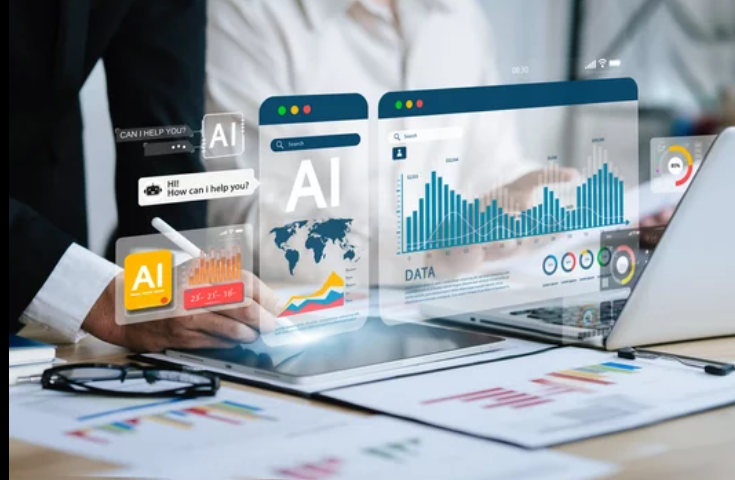
The relationship between Artificial Intelligence (AI) and human intelligence is evolving into one of the most important dynamics of the modern era. Rather than existing as separate forces, they are increasingly converging—creating systems where human creativity, intuition, and emotional understanding merge with machine precision, speed, and data-driven reasoning.
This convergence is not about replacement. It is about integration. It is about building a future where humans and intelligent machines work together to solve complex problems, enhance productivity, and expand the boundaries of innovation.
In this article, we explore how AI and human intelligence are converging, what this means for society, and how this partnership will shape the future of work, creativity, and decision-making.
Understanding the Two Forms of Intelligence
To understand their convergence, it is important to first distinguish between human intelligence and artificial intelligence.
Human Intelligence
Human intelligence is characterized by:
- Emotional understanding and empathy
- Creativity and imagination
- Ethical reasoning and moral judgment
- Adaptability in complex and uncertain environments
Humans excel at abstract thinking, emotional connection, and contextual decision-making.
Artificial Intelligence
AI, on the other hand, is defined by:
- Speed and computational power
- Ability to process massive datasets
- Pattern recognition and prediction
- Consistency and precision in execution
AI excels in structured environments and data-heavy tasks.
When combined, these strengths create a powerful synergy.
The Concept of Convergence: Humans and Machines Working as One
The convergence of AI and human intelligence refers to a future where both forms of intelligence complement each other seamlessly.
Key Aspects of Convergence
- Humans provide creativity, ethics, and strategic direction
- AI provides speed, analysis, and automation
- Together, they enhance decision-making and innovation
This partnership leads to what is often called augmented intelligence—a system where machines enhance human capabilities rather than replace them.
How AI Is Enhancing Human Intelligence
AI is already amplifying human abilities across multiple domains.
1. Decision-Making Support
AI systems analyze vast amounts of data and provide insights that help humans make better decisions faster.
2. Cognitive Enhancement
AI tools assist with memory, analysis, and problem-solving, effectively extending human cognitive capacity.
3. Creativity Boost
From generating design ideas to composing music or writing content, AI acts as a creative partner, expanding human imagination.
4. Learning Acceleration
Personalized AI-driven education systems help individuals learn faster and more efficiently.
Human Intelligence Guiding AI Development
While AI enhances humans, human intelligence remains essential in guiding AI systems.
Ethical Oversight
Humans define ethical boundaries to ensure AI operates fairly and responsibly.
Goal Setting
AI systems require human-defined objectives to function effectively.
Interpretation and Judgment
Humans provide context, emotional understanding, and moral reasoning that AI lacks.
This ensures that AI remains aligned with human values.
The Workplace of the Future: Human-AI Collaboration
One of the most visible impacts of this convergence is in the workplace.
AI as a Digital Colleague
AI systems are becoming active collaborators in professional environments, handling repetitive tasks and providing real-time insights.
Human Roles Are Evolving
Instead of being replaced, many roles are being redefined:
- Doctors using AI for diagnostics
- Engineers using AI for design optimization
- Marketers using AI for customer insights
- Managers using AI for strategic planning
The result is higher productivity and more strategic human roles.
Education in the Age of Convergence
Education systems are being reshaped by the integration of AI and human intelligence.
Personalized Learning
AI adapts educational content to individual learning styles and speeds.
Teacher-AI Collaboration
Teachers use AI tools to enhance instruction and track student progress.
Lifelong Learning
Continuous learning becomes essential as humans work alongside evolving AI systems.
This creates a more dynamic and accessible education system.
Healthcare: A Powerful Human-AI Partnership
Healthcare is one of the most promising areas for convergence.
AI-Assisted Diagnosis
AI analyzes medical data to detect diseases early and with high accuracy.
Human-Centered Care
Doctors provide empathy, ethical judgment, and patient communication—areas where AI cannot replace humans.
Precision Medicine
AI helps personalize treatments based on genetic and lifestyle data.
Together, this leads to more accurate and compassionate healthcare.
Creativity and Innovation in a Hybrid Intelligence Era
The fusion of AI and human intelligence is revolutionizing creativity.
AI as a Creative Assistant
AI helps generate ideas, designs, and content, acting as a tool for inspiration.
Human Direction Remains Central
Humans guide storytelling, emotional depth, and artistic intent.
New Forms of Art
Hybrid creativity is producing entirely new forms of digital art, music, and interactive experiences.
This collaboration expands the boundaries of human expression.
Ethical Challenges in Human-AI Convergence
As AI becomes more integrated with human intelligence, ethical concerns grow.
Loss of Autonomy
Overreliance on AI may reduce independent human thinking.
Bias and Fairness
AI systems can inherit biases from data, requiring human oversight.
Privacy Concerns
The sharing of cognitive and behavioral data raises privacy risks.
Accountability
Determining responsibility for AI-assisted decisions remains a challenge.
These issues require strong ethical frameworks and governance.
Neurotechnology and the Future of Integration
Emerging technologies are pushing convergence even further.
Brain-Computer Interfaces (BCIs)
These systems may allow direct communication between the brain and machines.
Cognitive Enhancement
Future technologies could enhance memory, focus, and learning ability.
Human-AI Symbiosis
Long-term possibilities include deeper integration between biological and digital intelligence.
While still emerging, these technologies could redefine what it means to be human.
Societal Impact of Converging Intelligences
The merging of AI and human intelligence will reshape society in profound ways.
Economic Transformation
New industries will emerge, while traditional roles will evolve or disappear.
Inequality Risks
Access to advanced AI tools may create new social and economic divides.
Cultural Shifts
Human identity and creativity will evolve in response to AI collaboration.
Societies must adapt to ensure inclusive and fair development.
Preparing for a Converged Future
To thrive in this new era, individuals and organizations must adapt.
Essential Skills
- Critical thinking and problem-solving
- Emotional intelligence
- Digital literacy and AI understanding
- Creativity and adaptability
Organizational Strategies
- Integrate AI responsibly into workflows
- Invest in human-AI collaboration tools
- Prioritize ethical AI development
- Support continuous employee learning
Preparation will be key to success in an AI-enhanced world.
Conclusion: A New Era of Shared Intelligence
The convergence of AI and human intelligence represents one of the most transformative developments in human history. It is not a competition between man and machine, but a partnership that combines the best of both worlds.
AI brings speed, scale, and precision. Humans bring creativity, empathy, and purpose. Together, they form a powerful hybrid intelligence capable of solving complex problems and driving unprecedented innovation.
The future will not belong to AI alone, nor to humans alone—it will belong to their convergence. Those who embrace this partnership will shape the next era of progress, creativity, and human advancement.
Also Read :