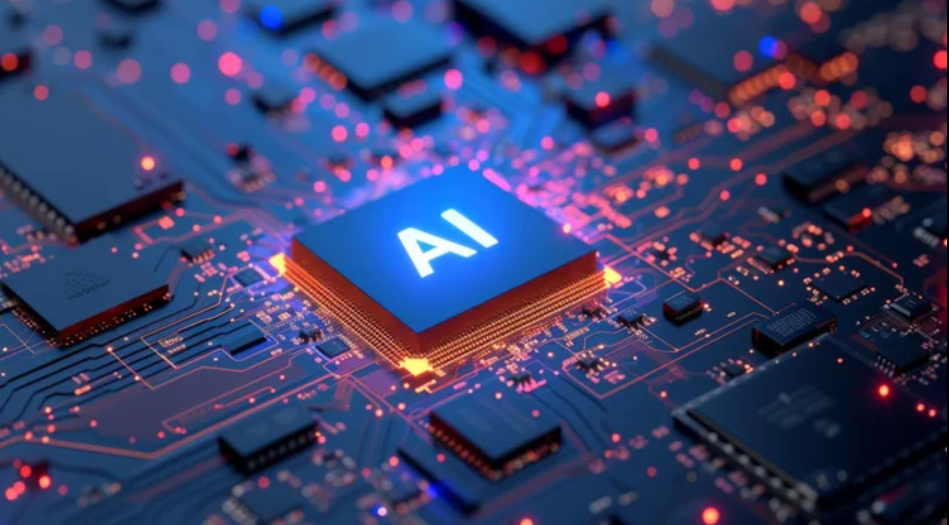
Artificial Intelligence is rapidly transforming the global economy in ways comparable to the Industrial Revolution and the rise of the internet. Businesses, governments, and industries around the world are increasingly integrating AI technologies into their operations to improve productivity, reduce costs, and unlock new opportunities for innovation.
From automated factories and intelligent financial systems to AI-driven healthcare and smart cities, the world is entering a new economic era powered by intelligent machines and data-driven decision-making. This shift is not simply about technological advancement—it represents a complete transformation of how economies function, how businesses compete, and how people work.
Many experts now describe this transformation as the next industrial revolution. Unlike previous revolutions driven by steam engines, electricity, or computers, this new era is powered by Artificial Intelligence, automation, machine learning, and advanced digital systems.
In this article, we explore how AI-powered economies are reshaping industries, creating new opportunities, influencing global markets, and redefining the future of economic growth.
Understanding AI-Powered Economies
An AI-powered economy is one where Artificial Intelligence technologies play a central role in production, services, decision-making, and innovation.
AI systems can process enormous amounts of data, identify patterns, automate tasks, and generate insights much faster than humans alone.
These capabilities allow businesses and governments to:
- Increase efficiency
- Reduce operational costs
- Improve customer experiences
- Optimize resource management
- Accelerate innovation
- Enhance productivity
As AI adoption grows, economies are becoming more digital, interconnected, and automated.
The Evolution of Industrial Revolutions
To understand why AI is considered the next industrial revolution, it is important to look at the major economic transformations throughout history.
The First Industrial Revolution
The first industrial revolution introduced steam engines and mechanized manufacturing in the late 18th century.
This transformed agriculture-based economies into industrial societies.
The Second Industrial Revolution
The second revolution introduced electricity, mass production, and assembly lines.
Factories became more efficient, and global trade expanded rapidly.
The Third Industrial Revolution
The digital revolution brought computers, the internet, and information technology into workplaces and homes worldwide.
Automation and communication technologies transformed businesses and industries.
The Fourth Industrial Revolution
Today, AI, robotics, big data, cloud computing, and intelligent automation are driving a new phase of economic transformation often called Industry 4.0.
This revolution is characterized by machines that can learn, adapt, and make decisions.
AI Is Transforming Global Industries
Artificial Intelligence is influencing nearly every sector of the economy.
Manufacturing
AI-powered robots and automation systems improve production speed, quality control, and operational efficiency.
Smart factories use predictive maintenance systems to identify equipment problems before breakdowns occur.
Healthcare
AI assists with diagnostics, medical imaging, drug discovery, and patient management.
Healthcare systems become more efficient and personalized through intelligent technologies.
Finance
Banks and financial institutions use AI for fraud detection, risk analysis, automated trading, and customer service.
AI-driven financial systems can process market information in real time and improve decision-making.
Retail and E-Commerce
Retail companies use AI to personalize customer experiences, manage inventory, and optimize supply chains.
Recommendation algorithms help businesses increase customer engagement and sales.
Transportation and Logistics
AI supports autonomous vehicles, route optimization, traffic management, and supply chain efficiency.
These technologies reduce costs and improve transportation systems globally.
Automation and Productivity Growth
One of the most significant economic impacts of AI is increased productivity.
AI systems can perform repetitive tasks faster and more accurately than humans, allowing organizations to operate more efficiently.
Productivity Benefits of AI
- Reduced operational costs
- Faster decision-making
- Improved accuracy
- Increased output
- Enhanced customer service
- Better resource management
Businesses adopting AI technologies often gain competitive advantages by streamlining operations and improving performance.
Higher productivity can contribute to overall economic growth and increased global competitiveness.
AI and the Future of Work
AI-powered economies are also transforming labor markets.
While automation may replace certain repetitive jobs, it is also creating entirely new career opportunities.
Jobs Most Affected by Automation
- Data entry
- Manufacturing assembly
- Basic customer support
- Routine administrative work
- Warehouse operations
Emerging AI-Driven Careers
- AI engineers
- Data scientists
- Robotics specialists
- Cybersecurity analysts
- Machine learning experts
- AI ethics consultants
The future workforce will increasingly require digital skills, adaptability, and the ability to work alongside intelligent technologies.
Human creativity, emotional intelligence, leadership, and problem-solving will remain highly valuable.
Small Businesses and Entrepreneurs Benefit From AI
AI is no longer limited to large corporations.
Affordable AI tools are allowing small businesses and entrepreneurs to compete more effectively in global markets.
AI Tools for Small Businesses
- Automated marketing systems
- Customer service chatbots
- Social media analytics
- Inventory management tools
- AI content generation
- Sales forecasting systems
These technologies help businesses reduce costs, improve efficiency, and scale operations more quickly.
Entrepreneurs who embrace AI can innovate faster and reach larger audiences with fewer resources.
Smart Cities and AI-Driven Infrastructure
AI-powered economies also influence urban development and public infrastructure.
Smart cities use intelligent systems to improve transportation, energy management, public safety, and resource efficiency.
Smart City Applications
- Intelligent traffic systems
- Smart energy grids
- AI-powered surveillance
- Automated waste management
- Water conservation systems
These technologies improve quality of life while reducing environmental impact and operational costs.
Governments investing in smart infrastructure may achieve stronger economic performance and sustainability.
AI and Global Economic Competition
Countries worldwide are racing to become leaders in Artificial Intelligence development.
Nations investing heavily in AI research, digital infrastructure, and workforce education may gain major economic advantages.
Leading Areas of AI Investment
- Research and development
- Semiconductor technology
- Cloud computing
- Robotics
- Education and training
- Cybersecurity
AI leadership could influence global trade, military power, innovation capacity, and economic influence in the future.
International competition for AI dominance is becoming increasingly important in global politics and economics.
Ethical Challenges in AI-Powered Economies
Despite its enormous potential, AI also raises important ethical and social concerns.
Job Displacement
Automation may create economic disruption for workers in industries heavily affected by AI technologies.
Governments and businesses must support workforce retraining and education programs.
Wealth Inequality
AI-driven growth could increase wealth concentration among companies and countries with advanced technological capabilities.
Ensuring fair access to AI opportunities is essential for balanced economic development.
Data Privacy
AI systems rely heavily on personal and business data.
Protecting privacy and ensuring secure data management remain critical challenges.
Algorithmic Bias
AI systems may produce unfair outcomes if trained on biased or incomplete data.
Transparency and ethical oversight are necessary to prevent discrimination and misuse.
AI and Sustainable Economic Growth
AI also has the potential to support sustainability and environmental protection.
AI Applications in Sustainability
- Renewable energy optimization
- Smart agriculture
- Carbon emission monitoring
- Climate prediction systems
- Resource management
AI-powered economies can become more efficient while reducing environmental waste and supporting green innovation.
Sustainable AI development may help balance economic growth with environmental responsibility.
Education and Workforce Transformation
The rise of AI-powered economies requires major changes in education systems.
Future workers will need skills such as:
- Digital literacy
- Critical thinking
- Creativity
- AI understanding
- Adaptability
- Communication
- Problem-solving
Traditional education models focused on memorization may become less relevant.
Lifelong learning and continuous skill development will become essential for career success in an AI-driven world.
Educational institutions must prepare students for rapidly evolving industries and technologies.
The Role of Governments in AI Economies
Governments play a critical role in shaping the future of AI-powered economies.
Key responsibilities include:
- Developing AI regulations
- Investing in digital infrastructure
- Supporting innovation
- Protecting workers
- Promoting ethical AI use
- Encouraging economic inclusion
Balanced policies can help maximize AI’s economic benefits while minimizing social risks.
International cooperation may also become necessary to address global AI challenges and standards.
The Future of AI-Powered Economies
The future of AI-powered economies may include:
- Fully automated industries
- Autonomous transportation networks
- Intelligent healthcare systems
- AI-driven financial markets
- Personalized education platforms
- Advanced robotics integration
As AI systems become more sophisticated, economic systems may become faster, more connected, and highly data-driven.
Innovation cycles could accelerate dramatically, creating new industries and transforming global markets.
The next industrial revolution may reshape society more deeply than any previous technological transformation.
Human Creativity Will Remain Essential
Despite the rise of automation, human creativity and innovation will remain central to economic progress.
AI can process data and automate tasks, but humans continue to provide:
- Vision
- Leadership
- Emotional understanding
- Ethical reasoning
- Cultural insight
- Creative imagination
The most successful economies will likely combine technological power with human ingenuity.
Human-machine collaboration may become the foundation of future economic systems.
Conclusion
AI-powered economies are ushering in the next industrial revolution, transforming industries, labor markets, businesses, and global economic structures. Artificial Intelligence is increasing productivity, accelerating innovation, and reshaping how societies create and distribute value.
While challenges such as job displacement, inequality, and ethical concerns remain important, the opportunities created by AI are enormous. Countries, businesses, and individuals that embrace technological change and invest in digital skills may thrive in this new economic era.
The future economy will likely be defined by intelligent automation, data-driven decision-making, and close collaboration between humans and machines. Success in this evolving world will depend not only on technological advancement but also on responsible leadership, ethical development, and human adaptability.
Also Read :