Artificial Intelligence is rapidly becoming one of the most influential technologies in human history. It is reshaping industries, transforming economies, and changing how people live, work, and communicate. As AI continues to evolve, a powerful question emerges: can AI build a better world?
The idea of a “better world” is complex. It involves improved healthcare, reduced poverty, better education, environmental sustainability, safer communities, and greater equality. AI has the potential to contribute to all of these areas. However, it also brings challenges such as inequality, privacy risks, job displacement, and ethical concerns.
Whether AI builds a better world depends not only on what it can do, but on how it is designed, governed, and used.
In this article, we explore how AI can improve society, the risks it presents, and what must be done to ensure that its development benefits all of humanity.
Understanding the Role of AI in Society
Artificial Intelligence refers to systems that can perform tasks that normally require human intelligence. These include learning, reasoning, problem-solving, language understanding, and decision-making.
AI is already used in:
- Healthcare systems
- Education platforms
- Financial services
- Transportation networks
- Communication tools
- Environmental monitoring
Because AI can process vast amounts of data quickly, it can identify patterns and solutions that humans may miss.
This makes AI a powerful tool for solving complex global problems.
How AI Can Contribute to a Better World
AI has the potential to improve nearly every aspect of human life. Its ability to analyze data, automate processes, and make predictions can help address some of the world’s biggest challenges.
1. AI in Healthcare: Saving Lives and Improving Health
One of the most promising areas for AI is healthcare.
AI can improve healthcare by:
- Detecting diseases early
- Assisting doctors in diagnosis
- Speeding up drug discovery
- Personalizing treatment plans
- Monitoring patient health in real time
For example, AI systems can analyze medical images such as X-rays or MRIs to identify signs of diseases like cancer at earlier stages than traditional methods.
In the future, AI could make healthcare more accessible, affordable, and efficient worldwide, especially in underserved regions.
2. AI and Education: Expanding Access to Knowledge
Education is another area where AI can build a better world.
AI-powered education systems can:
- Provide personalized learning experiences
- Support students with real-time feedback
- Translate educational materials into different languages
- Help teachers manage classrooms more effectively
- Offer remote learning opportunities globally
This can reduce educational inequality by giving more people access to high-quality learning resources, regardless of location or income.
AI tutors and learning platforms can also help students learn at their own pace, improving overall outcomes.
3. AI and Climate Change Solutions
Climate change is one of the greatest global challenges, and AI can play a key role in addressing it.
AI can help by:
- Predicting weather patterns and natural disasters
- Optimizing energy consumption
- Supporting renewable energy systems
- Monitoring deforestation and pollution
- Improving agricultural efficiency
For example, AI systems can analyze environmental data to improve energy efficiency in cities or predict climate-related risks more accurately.
By helping manage resources better, AI can support global sustainability efforts.
4. AI in Poverty Reduction and Economic Development
AI can also contribute to reducing poverty and improving economic opportunities.
Ways AI Supports Economic Growth
- Automating agricultural processes to increase food production
- Improving supply chain efficiency
- Supporting small businesses with digital tools
- Expanding access to financial services through fintech
- Creating new industries and job opportunities
In developing regions, AI-powered mobile applications can provide farmers with weather forecasts, market prices, and farming advice.
This can help increase productivity and income levels.
5. AI in Disaster Prediction and Humanitarian Aid
AI is increasingly used to predict and respond to natural disasters.
AI systems can:
- Detect early signs of earthquakes, floods, and storms
- Analyze satellite images for disaster planning
- Improve emergency response coordination
- Assist humanitarian organizations in resource distribution
These capabilities can save lives by improving preparedness and response times.
In crisis situations, AI can help deliver aid more efficiently to affected populations.
6. AI and Public Safety
AI can improve safety in communities and cities.
Applications in Safety
- Crime prediction and prevention
- Smart surveillance systems
- Traffic accident reduction
- Emergency response optimization
For example, AI-powered traffic systems can reduce accidents by adjusting traffic signals based on real-time conditions.
However, the use of AI in surveillance must be carefully regulated to avoid privacy violations.
The Risks of AI in Building a Better World
While AI offers significant benefits, it also presents serious risks that must be addressed.
1. Job Displacement and Economic Inequality
One of the most significant concerns is the impact of AI on employment.
AI automation can replace jobs in:
- Manufacturing
- Transportation
- Customer service
- Administrative work
This may lead to job losses for certain groups of workers.
Without proper planning, AI could increase economic inequality between those who benefit from technology and those who do not.
2. Privacy and Data Security Concerns
AI systems rely heavily on data, which raises privacy concerns.
Risks include:
- Unauthorized data collection
- Surveillance misuse
- Identity theft
- Data breaches
Protecting personal information is essential to building trust in AI systems.
Strong regulations and cybersecurity measures are needed to ensure safe data use.
3. Bias and Fairness Issues
AI systems can sometimes produce biased results if trained on incomplete or unfair data.
This can lead to:
- Discrimination in hiring processes
- Unequal access to financial services
- Biased law enforcement predictions
Ensuring fairness in AI decision-making is critical for social justice.
Developers must use diverse and representative data to reduce bias.
4. Overdependence on Technology
As AI becomes more integrated into daily life, there is a risk of overdependence.
Potential issues include:
- Reduced human decision-making skills
- Loss of critical thinking abilities
- Increased reliance on automated systems
A balance between human judgment and AI assistance is essential.
5. Ethical Challenges in AI Development
AI raises important ethical questions:
- Who is responsible when AI makes mistakes?
- Should AI be allowed to make life-critical decisions?
- How should AI systems be regulated globally?
Without clear ethical guidelines, AI could be misused in harmful ways.
Can AI Alone Build a Better World?
The answer is no—AI alone cannot build a better world.
AI is a tool, not a decision-maker with human values. It does not understand morality, empathy, or justice in the way humans do.
A better world requires:
- Human responsibility
- Ethical governance
- Fair policies
- Inclusive development
- Global cooperation
AI can support progress, but humans must guide its direction.
The Importance of Responsible AI Development
To ensure AI contributes positively to society, responsible development is essential.
Key Principles of Responsible AI
- Transparency in how AI systems work
- Accountability for AI decisions
- Protection of privacy and data
- Fair and unbiased algorithms
- Human oversight in critical decisions
Governments, companies, and researchers must work together to create safe and ethical AI systems.
The Future: AI as a Partner in Building a Better World
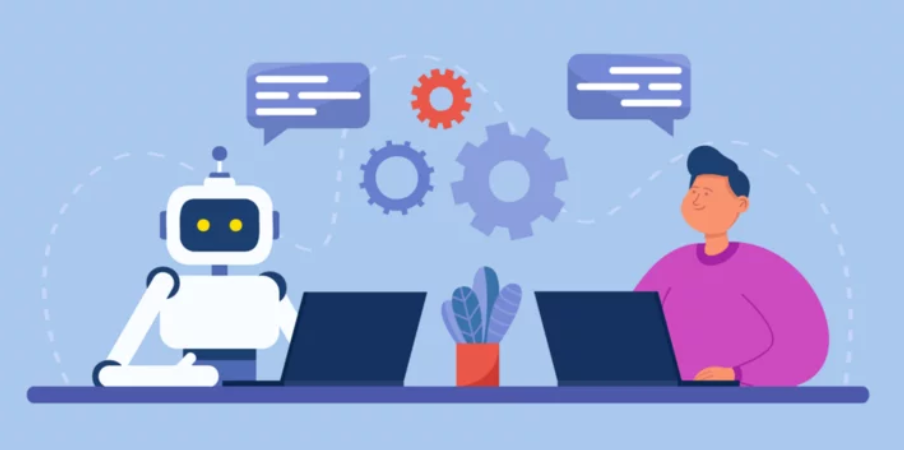
The most realistic future is not one where AI replaces humanity, but one where AI works alongside humans.
AI can act as a powerful partner by:
- Enhancing human capabilities
- Solving complex global challenges
- Improving efficiency and productivity
- Supporting decision-making
Humans bring creativity, empathy, and moral reasoning, while AI brings speed, accuracy, and data processing power.
Together, they can achieve outcomes neither could accomplish alone.
Conclusion
AI has enormous potential to help build a better world. It can improve healthcare, education, environmental sustainability, economic development, and public safety. It can help solve global challenges that once seemed impossible.
However, AI also brings risks such as job displacement, privacy concerns, bias, and ethical challenges. Whether AI leads to a better world depends entirely on how it is developed and used.
The future of AI must be guided by human values, ethical principles, and responsible governance. If managed correctly, AI can become one of the most powerful tools ever created for improving human life.
Also Read :